Helpful Resources
Raising Awareness: WHAT ARE MISTAKES?
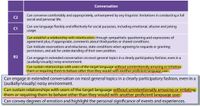
Council of Europe (2020). CEFR-Companion Volume. p. 73f.
Pedagogical Implications | |
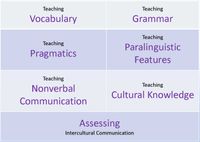 Zsuzsanna Ittzés Abrams (2020). Intercultural Communication and Language Pedagogy. From Theory to Practice. |  |
EVOLUTION - Not Revolution!
 “One valuable approach is to introduce people to the key aspects they need to look out for (i.e. be mindful of). […] They need to be linked with examples of interaction, so that trainees can grasp how they may apply.” | 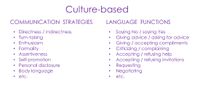 For a wide selection of academic contributions to this topic we recommend Ali Fuad Selvi / Nicola Galloway (eds.) (2025). The Routledge Handbook of Teaching English as an International Language. |
DISTINGUISH: | |
 | "A first-order notion of 'culture' is used by lay people and the participants in our interviews when they explicitly mention culture to account for specific behaviours or where they actively construct a relatively unified (and often stereotypical) view of ‘a culture’ […] such as when they talk about ‘the Chinese’ and ‘the West’. Stephanie Schnurr, Olkga Zayls (2017). Language and Culture at Work. p. 148 |