Are we teaching the right things?
Two frameworks published by the Council of Europe, i.e. the Reference Framework of Competences for Democratic Culture (2013) and the Common European Framework of Reference for Languages - Companion Volume (2020), complement each other in a meaningful way. Both focus on INTERCULTURAL COMPETENCE and together they specify the primary aim of European education policy:
Promoting social cohesion in a linguistically and culturally diverse Europe.


The CEFR's approach to language learning and teaching is based on a |
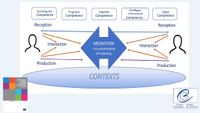 |
Three points are important.
- Language - i.e. a social construct - cannot adequately be described based on an individual language user's performance. Instead, two or more language users' performance when co-constructing meaning need to be taken into consideration.
- Communication includes the negotiation of interlocutors' identities, roles and relationships. Establishing sufficiently trustful relationships can be considered a precondition of successful communication.
- In communication, contexts always play a crucial role. Meaning does not lie in linguistic elements alone but in their context-based use. Contexts may include micro and/or meso and/or macro elements. They may also include aspects of status and power.
Contexts of Communication
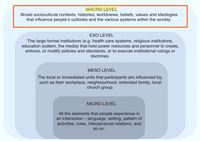 Helen Spencer-Oatey, Dániel Z. Kádár (2021). Intercultural Politeness. Managing Relations across Cultures. p. 340 | In international and intercultural encounters elements listed under MACRO LEVEL may play a crucial role in establishing trust and understanding - or the opposite! The Council of Europe suggests including these in foreign language teaching to promote social cohesion in a linguistically and culturally diverse Europe. |